Download the full 3(D) Review here.
Background/summary:
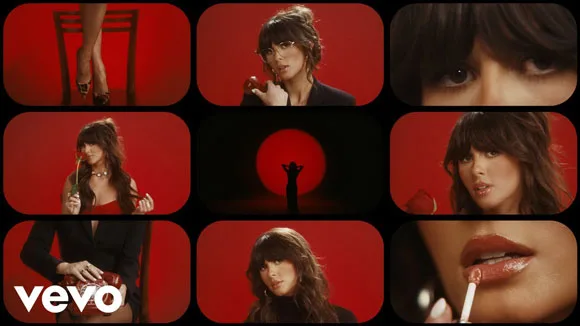
Currently ruling the charts with multiple hits, 27-year-old country star Ella Langley released this second single off her Dandelion album in February of 2026. The song peaked at #2 on the Billboard Hot 100, only to be kept from the top spot by another Langley hit, “Choosin’ Texas.” It’s remained on the charts ever since and currently sits at #10. This catchy pop-country anthem pushes back on the pressures and expectations so many, young and old alike, feel to conform to our current cultural script on identity as we seek the answer to one of life’s most basic questions: “Who am I?”. “Be Her” pines for a life that is less pressure-filled, authentic, and simple.
(D)iscover: What is the message/worldview?
- The subject of the song’s lyrics is the “She” that Langley wants to be. Rather than being an object of the singer’s envy, “She” is someone Langley aspires to be as she longs to become a better version of herself. Langley has said, “It’s not about being someone else. It’s about being the her you want to be. I think there’s things that every single person on the planet would like to see themselves do better as a human being. . . . (these) are all the things that I’m looking forward to, in my life, changing about myself a little bit.”
- The first verse of “Be Her” contrasts the ideal of Langley’s aspirations with who she understands herself to be now: She drinks wine by the glass, not by the bottle/She ain’t stuck on the past, ain’t worried about tomorrow/She’s a lover, a mother, a sister, and wife/She rolls over in the morning to the love of her life/Only smokes on vacation/says just what she thinks/She don’t need validation or much of anything. What does Langley long for in terms of personal change? It’s a life marked by moderation, peace, commitment to family, marriage, and being so comfortable with who she is that she doesn’t feel pressure to base her self-worth on the opinions of others.
- The song’s chorus employs repetition to reveal an urgent, deep, and overwhelming desire for change and transformation: I just wanna be her so bad, it hurts so bad, it hurts so/ I just wanna be her, I just wanna be her.
- Langley returns to her comparison between what she is and what she wants to be in the second verse: She knows being rich is just a state of mind/She stays talking to Jesus, calls her mama all the time/She don’t over embellish, if she says it, then it’s true. Langley desires to be rich in relationships and not the material things of this world. Like “She”, Langley wants to foster a relationship with Jesus and the people He’s placed in her life. She wants to be a truth-teller full of integrity.
- In the song’s final verse, she reveals just how deep her longing for change actually is in a world full of unrealistic dead-end expectations. She expresses a willingness to give up everything: Don’t want all this drama, give me something real/Trade a mile high to walk one in her heels/Take all my money, everything I have/I just wanna be her, I just wanna be her so bad, it hurts so bad.
(D)iscErn: how does it stand in light of the biblical message/worldview?
- There is much to celebrate in Langley’s song. For starters, it exposes the empty dead-end road that our current cultural narrative, fueled by 24/7 social media pressure and consumerism, is encouraging young and old alike to walk. Langley rightly tells us that materialism, self-indulgence, avoidance of commitment, dishonesty, and trying to find meaning and purpose in popularity does not result in finding our true meaning and purpose in life. It’s as if she is paraphrasing the words of Proverbs 14:12 – “There is a way that seems right to a man, but its end is the way to death.”
- In the opening words of Chapter 12 of his Letter to the Romans, the Apostle Paul tells us that in grateful response to the grace and mercy God has shown us in the salvation that comes through faith in Jesus Christ, we are to live counter-cultural lives where everyday conformity to God’s revealed will and way is not only an act of worship, but is personally transformative as a pathway to growth in holiness (Romans 12:1-2). Whether or not Langley is pointing to a true Gospel-centered and transformed life in the song is unknown. However, she offers sound advice on what needs to be stepped away from, along with some aspects of what needs to be stepped in to.
- Aspirations for spiritual growth are proper and good. Paul tells those who are believers in Christ, “As you received Christ Jesus the Lord, so walk in him, rooted and built up in him and established in the faith, just as you were taught, abounding in thanksgiving” (Colossians 2:6-7). In the verse immediately following, Paul tells us to avoid being taken captive to the deceitful cultural narratives of the world (Colossians 2:8).
- Ella Langley’s desire to fill the emptiness of her current lifestyle and commitments brings to mind the story of The Rich Young Ruler and his encounter with Jesus (Matthew 19, Luke 18, and Mark 10). The story reminds us that even those who desire to be something or someone else may hesitate and even walk away sad and grieving once they know what it is God is calling them to give up and turn away from in terms of worldly pursuits in order to follow Jesus on the difficult path of discipleship, which is the only path that leads to fulfillment in this life and the life to come.
- While we will always be able to find good role models to emulate, the greatest role model every follower of Jesus should seek to emulate is our Lord and Savior, Jesus Christ. Our salvation does not come as a result of our efforts to emulate Jesus through obedience and good works, but rather through faith alone in His sacrifice on the Cross to pay for our sin and give us new life. However, once we come to faith in Jesus, we are instructed to “walk in the same way in which he walked” (I John 2:6) and to “follow in his steps” (I Peter 2:21). In effect, we are called to “Be Him”. What Ella Langley and all of us are ultimately longing for can only be found in Jesus Christ!
(D)ecide: what do i do with it?
- Youthworkers and parents should use the song as a discussion prompt for deeper conversations and reflection on matters of identity and the fruitless pursuit of trying to place one’s identity in anything or anyone other than Jesus Christ. Our true identity is not something we create. Rather, the truth is that peace, freedom, meaning and purpose only come when you rest your identity in who you are as one made by God, for God, in the image of God. . . and as a beloved child of God through the saving work of Jesus Christ!
- Questions for discussion to use in the home and youth group setting:
- What is it that Ella Langley is battling?
- Do you believe that Langley’s struggle is a common struggle for young people in today’s world? Why? How?
- What inside pressures and outside pressures do we face in today’s world that creates and complicates this identity dilemma?
- Have you ever wanted to be someone or something other than who you believe yourself to be? Who? What? Why?
- What “solutions” does the culture and world offer to remedy our identity struggles? Have you tried any? How did that work out? Do these “solutions” work? Why? Why not?
- What solution does the Gospel offer to our uneasiness and dissatisfaction with who we see ourselves to be?
- How do you believe living into the identity you’ve been given by God will change the way you live both online and offline in a world that encourages creating and curating your own identity?
- Use the song to serve as a prompt for discussions that compare and contrast the cultural narrative and the biblical narrative on these topics and more: identity, choosing role models, peer pressure to conform, sin, integrity, cultivating wisdom and discernment on who to listen to, and the joys/difficulties of following Jesus as his disciple.
Click the following link for more information and to order copies of CPYU’s How to Use Your Head to Guard Your Heart: A 3(D) Guide to Making Wise Media Choices for your students.
Download the full 3(D) Review here.
